

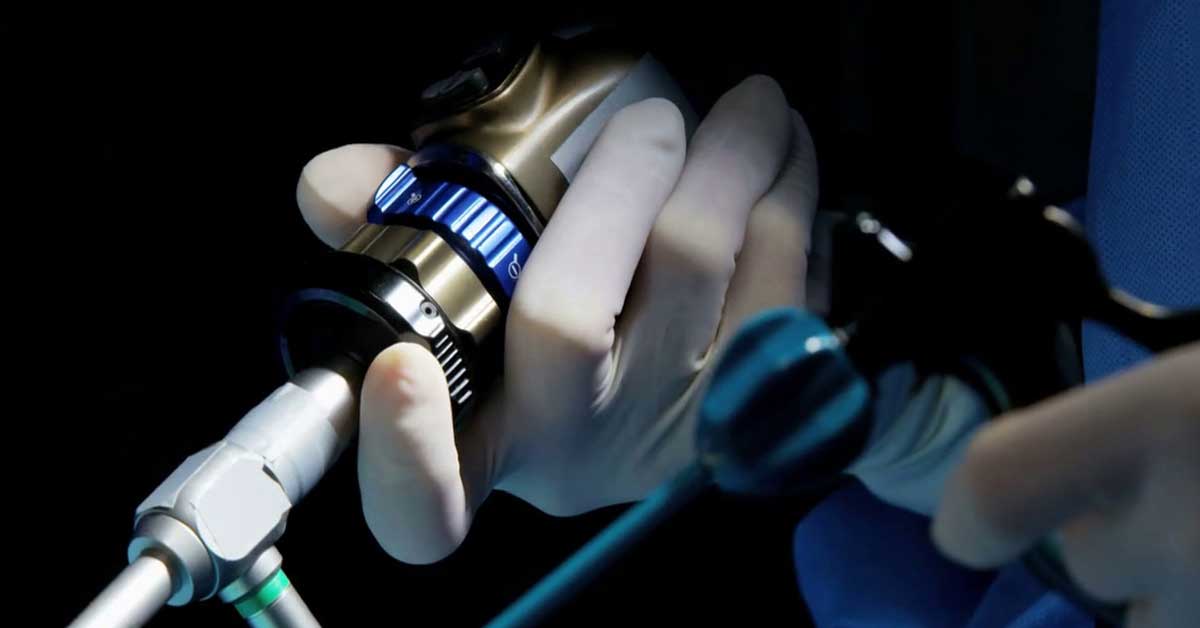
Hysteroscopy is a minimally invasive procedure that allows the gynecologist to examine the inside of the uterus using a thin instrument called a hysteroscope. It is performed through the vagina and cervix, without the need for abdominal incisions, and can be used both to diagnose and, when necessary, treat abnormalities within the uterine cavity.
It plays an important role in the investigation of infertility, recurrent miscarriages and abnormal uterine bleeding, as well as in the evaluation of conditions such as endometrial polyps, submucosal fibroids, intrauterine adhesions and uterine septum. Hysteroscopy may also be considered in selected patients undergoing IVF, particularly when abnormalities of the uterine cavity are suspected.
Depending on the indication, the procedure may be performed as a diagnostic hysteroscopy or as an operative hysteroscopy, allowing diagnosis and treatment to be combined in a single procedure.
What Is Hysteroscopy?
Hysteroscopy is a procedure used to examine the uterine cavity directly with the help of a hysteroscope, a thin telescope-like instrument equipped with a light and camera. The hysteroscope is introduced through the vagina and cervix, allowing the gynecologist to inspect the endometrium and the inside of the uterus without making any abdominal incisions.
The procedure can be performed for diagnostic purposes or combined with treatment when an abnormality is identified. During hysteroscopy, the doctor can assess the shape of the uterine cavity and identify conditions such as endometrial polyps, submucosal fibroids, intrauterine adhesions or a uterine septum.
In selected cases, small instruments can be passed through the hysteroscope to remove or correct the abnormality during the same procedure. Depending on the type and complexity of the hysteroscopy, it may be performed in an outpatient setting or in hospital, with the appropriate form of anesthesia determined individually.
When Is Hysteroscopy Recommended?
Hysteroscopy may be recommended when the gynecologist needs to investigate symptoms or abnormalities affecting the uterine cavity. Because it provides a direct view of the inside of the uterus, it can help identify conditions that may not always be fully assessed with ultrasound alone.
Common indications for hysteroscopy include:
- infertility or difficulty becoming pregnant,
- recurrent miscarriages,
- abnormal, heavy or irregular uterine bleeding,
- suspected endometrial polyps,
- submucosal fibroids,
- intrauterine adhesions or scar tissue,
- suspected uterine septum,
- abnormalities detected during ultrasound or other imaging,
- selected cases of repeated IVF failure when an abnormality of the uterine cavity is suspected.
During the same procedure, the doctor may also take a targeted biopsy or treat certain abnormalities such as polyps, selected fibroids or adhesions.
The decision to perform hysteroscopy is individualized according to the patient’s symptoms, medical and reproductive history, previous investigations and fertility treatment plan.
Diagnostic and Operative Hysteroscopy
Hysteroscopy can be performed either as a diagnostic procedure or as an operative procedure, depending on the reason for examination and whether treatment is required.
Diagnostic Hysteroscopy
Diagnostic hysteroscopy is used to examine the uterine cavity and identify possible abnormalities. It may be recommended in cases of infertility, recurrent miscarriages, abnormal uterine bleeding or when ultrasound findings suggest the presence of polyps, fibroids, adhesions or congenital abnormalities of the uterus.
It allows the gynecologist to assess the endometrium and the shape of the uterine cavity directly and, when necessary, obtain a targeted biopsy for further investigation.
Operative Hysteroscopy
Operative hysteroscopy allows certain abnormalities to be treated during the procedure. Fine surgical instruments are introduced through the hysteroscope, enabling the doctor to remove or correct selected conditions without abdominal incisions.
Operative hysteroscopy may be used for:
- removal of endometrial polyps,
- removal of selected submucosal fibroids,
- division of intrauterine adhesions,
- correction of a uterine septum when clinically indicated,
- treatment of other selected abnormalities within the uterine cavity.
In many cases, diagnosis and treatment can therefore be combined in the same procedure.
Hysteroscopy, Infertility and IVF
The condition of the uterine cavity can play an important role in fertility and embryo implantation. Abnormalities such as endometrial polyps, submucosal fibroids, intrauterine adhesions or a uterine septum may interfere with the normal environment of the uterus and, in selected cases, may require further investigation or treatment.
Hysteroscopy provides a direct view of the uterine cavity and can be particularly useful when an abnormality is suspected following ultrasound, when there is a history of recurrent pregnancy loss or in selected cases of repeated unsuccessful embryo transfers.
It is not routinely required before every IVF cycle. The decision to perform hysteroscopy is based on the woman’s medical history, previous fertility treatment, symptoms and findings from ultrasound or other investigations.
In cases of recurrent implantation failure, reassessment of the uterine cavity may be considered, and hysteroscopy has the additional advantage of allowing certain abnormalities to be treated during the same procedure.
See video of surgeries that we have performed:
Hysteroscopic removal of endometrial polyp
Hysteroscopic removal of fibroids
Hysteroscopic removal of fibroids
Hysteroscopic removal of polyps
Frequently Asked Questions About Hysteroscopy
Is hysteroscopy painful?
The experience varies from woman to woman. Some patients feel mild discomfort or cramping similar to period pain, while others may experience more significant pain. Pain relief, local anesthesia, sedation or general anesthesia may be considered depending on the type of procedure and the individual patient.
Does hysteroscopy require anesthesia?
Not always. Many diagnostic hysteroscopies can be performed without general anesthesia. Operative or more complex procedures may require local anesthesia, sedation or general anesthesia, depending on the treatment required and the patient’s individual needs.
How long does a hysteroscopy take?
A diagnostic hysteroscopy is usually a relatively short procedure and may take around 10–15 minutes. The duration can be longer when a biopsy is required or when polyps, fibroids or other abnormalities are treated during the same procedure.
How long is recovery after hysteroscopy?
Most patients can go home shortly after hysteroscopy and return to normal activities relatively quickly. Mild period-like cramps and light bleeding or spotting may occur for a few days. Recovery may take longer following more extensive operative hysteroscopy.
Is hysteroscopy necessary before IVF?
Hysteroscopy is not routinely required before every IVF cycle. It may be recommended when there are symptoms, abnormal ultrasound findings, a history of uterine abnormalities or other indications that further evaluation of the uterine cavity may be useful. The decision is made individually according to each patient’s medical and fertility history.
